LLC vs Corporation: Which Business Structure is Right for You?
Both LLCs and corporations provide personal liability protection, but they are very different structures with distinct tax treatment, ownership rules, and compliance requirements. Understanding the differences helps you choose the right structure for your business goals — and avoid expensive restructuring later.
Disclaimer: This content is for informational purposes only and does not constitute legal or tax advice. Always consult a qualified attorney and accountant before choosing a business structure.
The Two Types of Corporation
When comparing LLC vs corporation, you are usually comparing against one of two corporate structures. An S-Corporation is a pass-through tax entity (like an LLC) that avoids double taxation but has restrictions on shareholders. A C-Corporation is taxed as a separate entity and is the structure used by most large companies and venture-backed startups. Read What is an LLC? for foundational context.
LLC vs S-Corporation
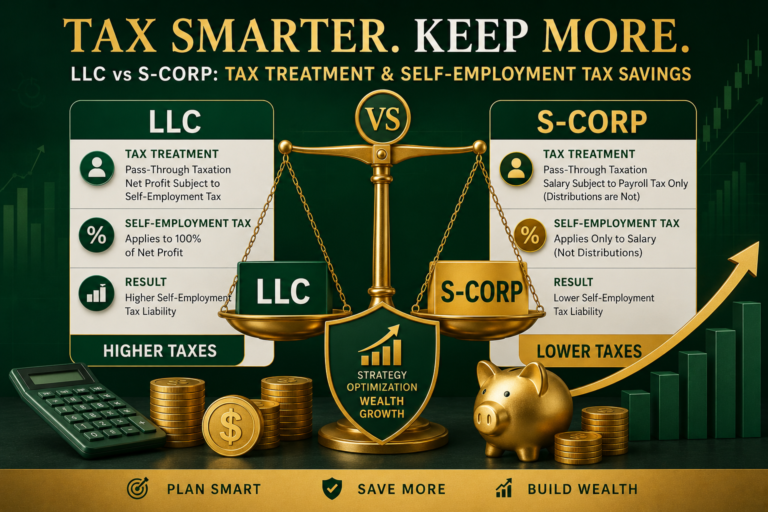
Taxes: Both use pass-through taxation. However, an LLC taxed as an S-Corp can potentially reduce self-employment taxes by paying the owner a reasonable salary (which avoids SE tax) and taking the remainder as a distribution. This strategy makes sense when net profits exceed approximately $40,000 to $60,000 annually.
Ownership restrictions: S-Corporations cannot have more than 100 shareholders, cannot have non-US citizens or permanent residents as shareholders, and can only have one class of stock. LLCs have no such restrictions.
Compliance: S-Corporations have more formal requirements — annual meetings, meeting minutes, stricter record-keeping. LLCs have more flexibility in how they are managed.
Best choice: An LLC with S-Corp election often provides the best of both worlds — LLC flexibility with potential S-Corp tax savings. Read LLC Taxes Explained for detail on the S-Corp election.
LLC vs C-Corporation
Taxes: The major disadvantage of a C-Corp is double taxation. The corporation pays corporate income tax on profits, then shareholders pay personal income tax on dividends. LLCs avoid this with pass-through taxation.
Investment: C-Corps are significantly better for raising institutional investment. Venture capital firms almost exclusively invest in C-Corps. If you plan to raise VC funding, a C-Corp (usually incorporated in Delaware) is typically required.
Stock options: C-Corps can issue stock options to employees more efficiently than LLCs, making them better for equity compensation programs.
Compliance: C-Corps have the most formal requirements — board of directors, annual meetings, bylaws, stock issuance, and extensive record-keeping. Significantly more complex and expensive to maintain than an LLC.
Best choice: C-Corp is appropriate for businesses planning to raise venture capital, eventually go public, or build a large equity compensation program. For most small businesses, the LLC is the better choice.
The Verdict for Most Small Businesses
For the vast majority of small businesses — freelancers, consultants, service businesses, retail, e-commerce, real estate investors — an LLC provides all necessary protection and tax flexibility at significantly lower cost and complexity than any corporate structure. The LLC’s ability to elect S-Corp taxation when income warrants it means you rarely need to restructure as you grow.
Ownership and Management Differences
An LLC is run according to its operating agreement, which gives owners wide freedom to decide who manages the business and how profits are split. A corporation follows a more rigid structure: shareholders elect a board of directors, the board appoints officers, and the company is expected to hold regular meetings and keep minutes. That extra formality is one reason many small owners find the LLC easier to maintain.
How Investors View Each Structure
If you plan to raise money from venture capital or angel investors, a C corporation is often preferred because it can issue multiple classes of stock and fits standard investment documents. If you plan to run a profitable small business owned by you and a few partners, an LLC is usually simpler. Choose the structure for the business you actually expect to build, not for the one you might build someday.
Double Taxation Explained Simply
A C corporation pays tax on its profits, and shareholders pay tax again when profits are distributed as dividends. This is commonly called double taxation. An LLC avoids it by default because profit passes through to the owners and is taxed once on their personal returns. An S corporation election is another route to pass-through treatment, with its own eligibility rules, which you can review on the IRS S corporations page.
Compliance Burden and Ongoing Costs
Corporations generally carry more recordkeeping: bylaws, minutes, stock records, and in many states a separate corporate tax filing. LLCs have lighter requirements but still need annual reports or fees in many states. When comparing total cost, include the time you will spend on administration, not only government fees.
Can You Switch Later?
Yes. An LLC can elect corporate tax treatment, and it can also convert to a corporation, though a conversion has legal and tax consequences. Starting as an LLC and changing later is a common path, so you are rarely locked into your first choice.
Frequently Asked Questions
Which is cheaper to maintain? An LLC is typically cheaper and simpler, though costs vary by state.
Does an LLC offer the same liability protection as a corporation? Both generally separate personal assets from business debts when the owner follows the required formalities.
Do I need a lawyer to pick? Not for a simple business, but complex ownership or investor plans justify professional advice.
This article is general education only and is not legal or tax advice.
Conclusion
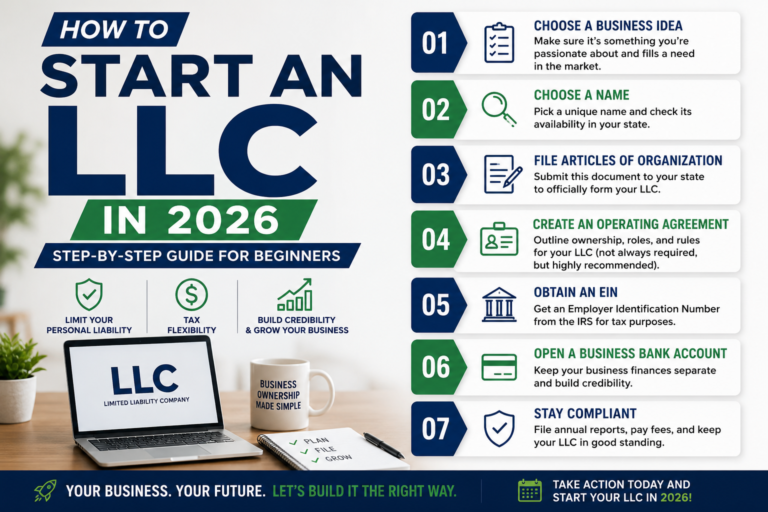
Choose an LLC unless you are specifically planning to raise venture capital or have other specific reasons requiring a corporate structure. For the full LLC formation process, see How to Form an LLC Step by Step and Best States to Form an LLC.